
Your posture impacts more than how you look. In fact, it has an influence on your physical and mental health, your energy, and the way others perceive you. As work habits and technology keep on evolving, getting to truly understand how posture affects you is essential.
Posture is a form of nonverbal communication
Body language, aka the way you carry your body, can often communicate more than your words. When you stand or sit tall, it conveys a sense of confidence and respect (both for yourself and for others) as well as an engaged interest in the conversation. Slouching, on the other hand, may show that someone is disinterested or has low self-esteem.

Because our lives are so connected to screens and devices, whether it’s on a smartphone or in a virtual meeting, we may slouch due to “text neck” from looking down at phones, hunching over a computer or tablet, and sitting too long while working from home on a couch or in another improved home workspace that doesn’t optimize posture.

Fortunately, posture-correcting wearables now exist that can help remedy these issues. You can also download apps or change settings on your phones, smartwatches, and other devices reminding you to stand or sit up straight. There are even AI-powered apps that can give users real-time feedback on posture and give you suggested guided stretches based on the activity you’re doing.
What are the consequences of poor posture?
Based on information from the Mayo Clinic and other health research, having poor posture is linked to symptoms like the following:
Jaw pain and headaches: Caused by tension and/or clenching in the upper back, jaw, or neck.
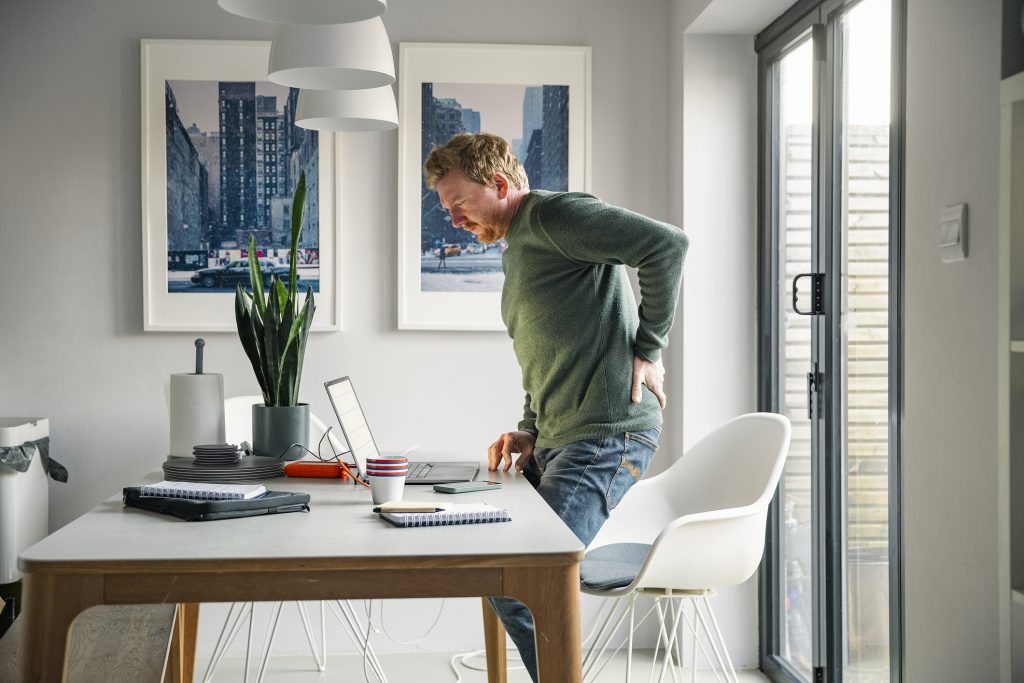
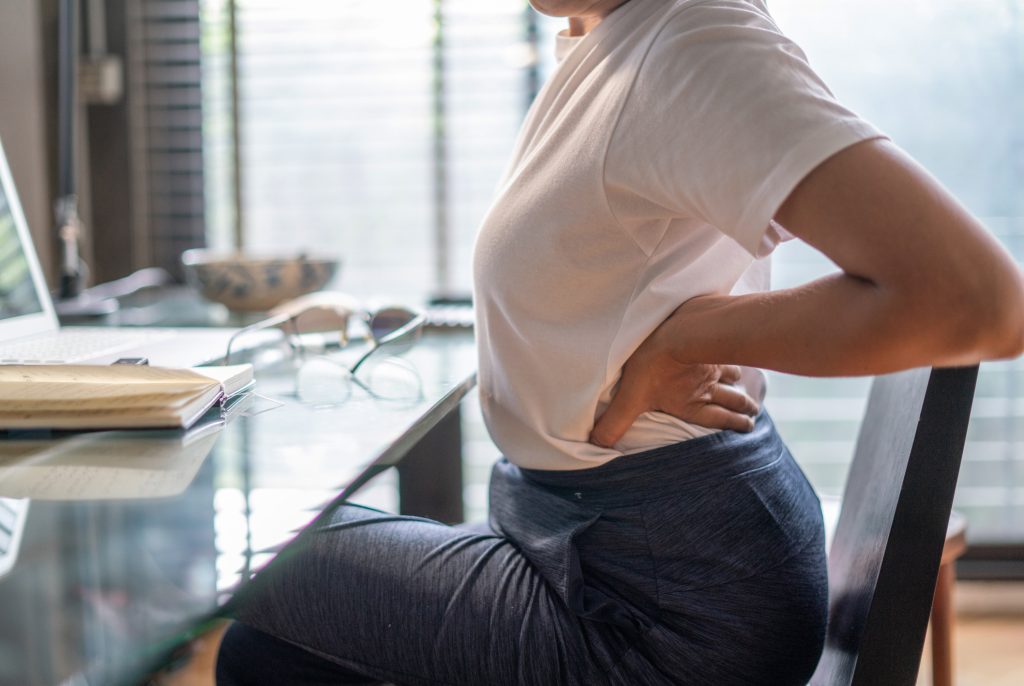
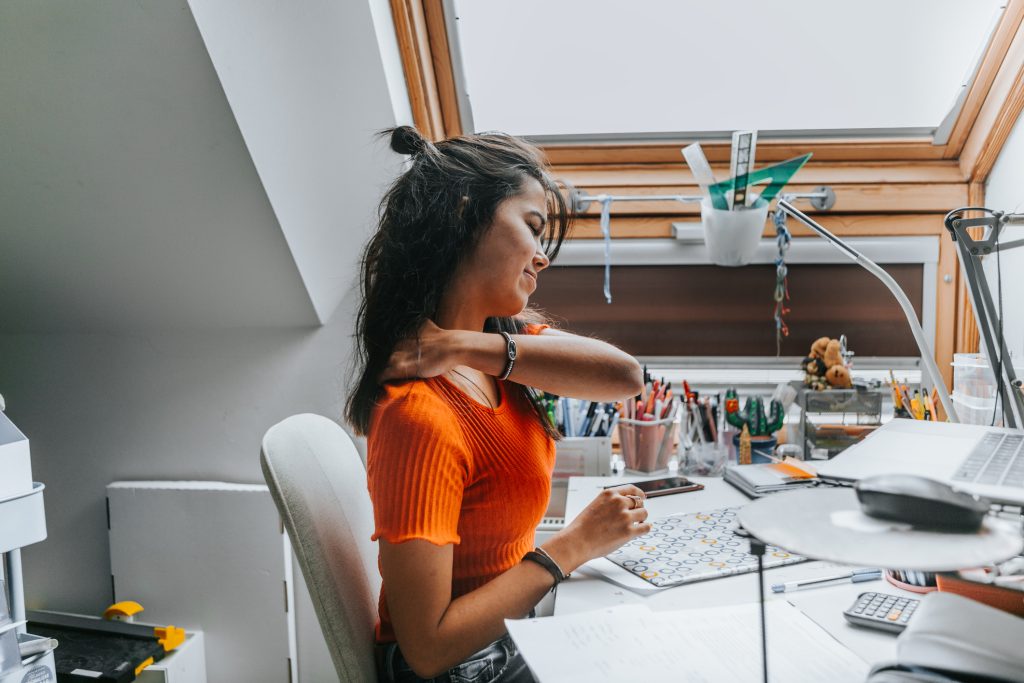
Chronic shoulder and back pain: Worsened by spending long hours at a desk without taking breaks or having the right ergonomic support.
Foot and joint pain: Unsupportive footwear and poor alignment can cause this, as can wearing flat or poorly designed shoes or slippers at home.
Fatigue and breathing issues: When you slouch, you compress your lungs and diaphragm, which can lead to low energy levels and shallow breathing.
Digestive problems: When you are slouching or slumping in the long term, or it can impact the function of your internal organs.
You can implement tiny daily changes to improve posture, including buying an adjustable or standing desk as well as an ergonomic computer chair that has a headrest and high back. You can also try posture-correcting shoes.
Surprisingly, having good posture is tied to having better mental health. When you sit or stand upright, you can reduce feelings of depression and anxiety, increase self-esteem, and even boost your concentration, which is vital for multitasking more effectively and thriving in the fast-paced lives we live today.
Are you sitting and standing correctly?
If you want to test your posture, stand with your back against a wall so that your shoulder blades, head, and bottom all touch it. Your heels should be two to four inches from the wall, leaving you able to just barely slide a flat hand behind your lower back. Then, try to walk away, but maintain that same alignment!
Tips for better posture in 2026
Check in with your body and stay posture-aware when you’re switching locations or tasks.
Use your technology wisely, setting posture alerts on your devices or integrating a wearable posture trainer.
Adjust the height of your screen by using laptop stands and external monitors so they remain at eye level.
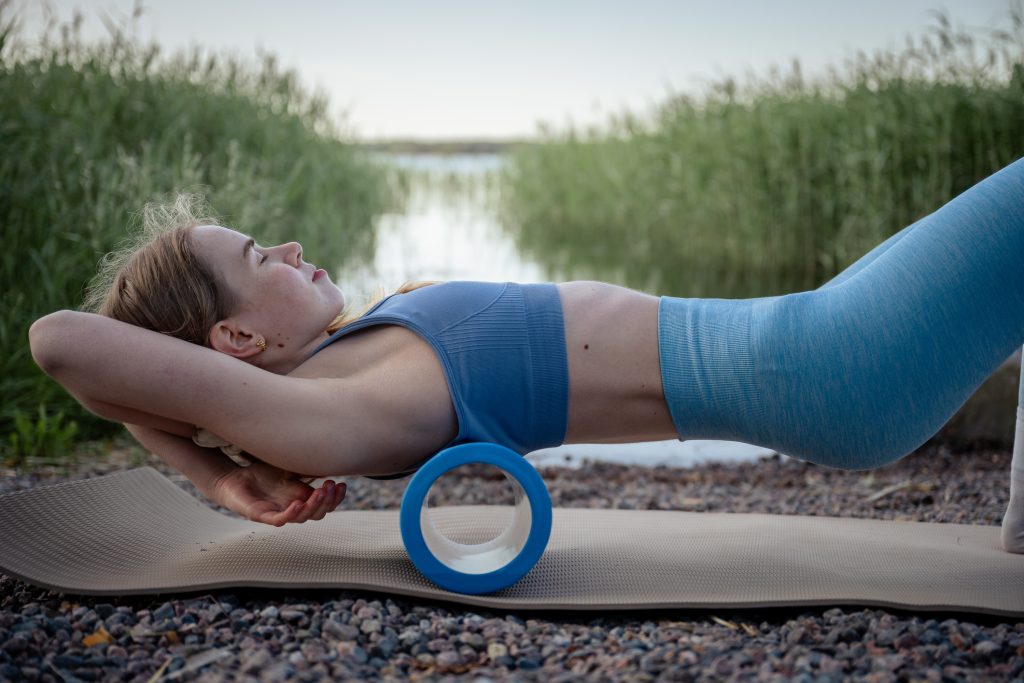
Stand up and stretch every hour, avoiding sitting for long periods of time. Movement is a must!
Keep your phone and tablet at eye level rather than looking down to avoid “tech neck.”
Set your chair up properly. Keep your feet flat on the ground and make sure your hips are level with or above the knees.
Stop crossing your legs—instead, sit with your feet flat and don’t put pressure on the area behind the knees.
Use lumbar support, like a rolled towel or small pillow, to maintain lower back health.
Engage your core by tightening abdominal muscles while walking or standing, this will help support your spine.
Strengthen regularly and lift with your legs, integrating core, back, and shoulder exercises to build up the postural support muscles. When lifting heavy things, bend your knees rather than rounding your back.

Think carefully about what shoes you want to wear, opting for ones that promote the natural movement of your feet. Barefoot shoes are a popular option. Stay away from excessively high heels or from wearing slippers for prolonged periods.
When you walk, walk tall, looking ahead and rolling your feet heel-to-toe. Additionally, make sure you swing your arms naturally.