Ever since Earth got its first living inhabitants, Mother Nature started running strange experiments on them one after another. Today, we call it “evolution,” and back then it was akin to throwing trillions of combinations at the wall and seeing what survives the impact. That’s how we got all those giant millipedes, armored fish, and countless other weirdos.
Here are ten bizarre creatures that once roamed the Earth.
Coelacanth — the undying fish (~420 million years ago)
The coelacanth is the ultimate fish. Scientists knew it from fossils and assumed it had disappeared millions of years ago. Then, in 1938, one turned up near South Africa. And just like that, the paleontologists lost their minds at the implication that this guy has been alive for at least 420 million years, having evolved too much. Today, Coelacanths spend their time deep underwater, often hiding in caves and hunting at night.
Tanystropheus — the reptile with way too much neck (~247–208 million years ago)
Imagine grabbing a reptile, like a lizard, and stretching its neck to a ridiculous length—that’s basically Tanystropheus. Its neck was longer than its body and tail combined, which sounds both impressive and very painful. Recent research shows that Tanystropheus most likely lived in water and used that ridiculous neck to snatch prey.
Inostrancevia — the saber-toothed beast (~259–251.9 million years ago)
Inostrancevia was a gorgonopsian, which is something in between a dinosaur and a true mammal that eventually led to mammals. If you were curious about why it resembles a combination of a bear, a tiger, and a giant lizard, you now have the answer. It had long legs, massive canine teeth, and a skull built for biting.
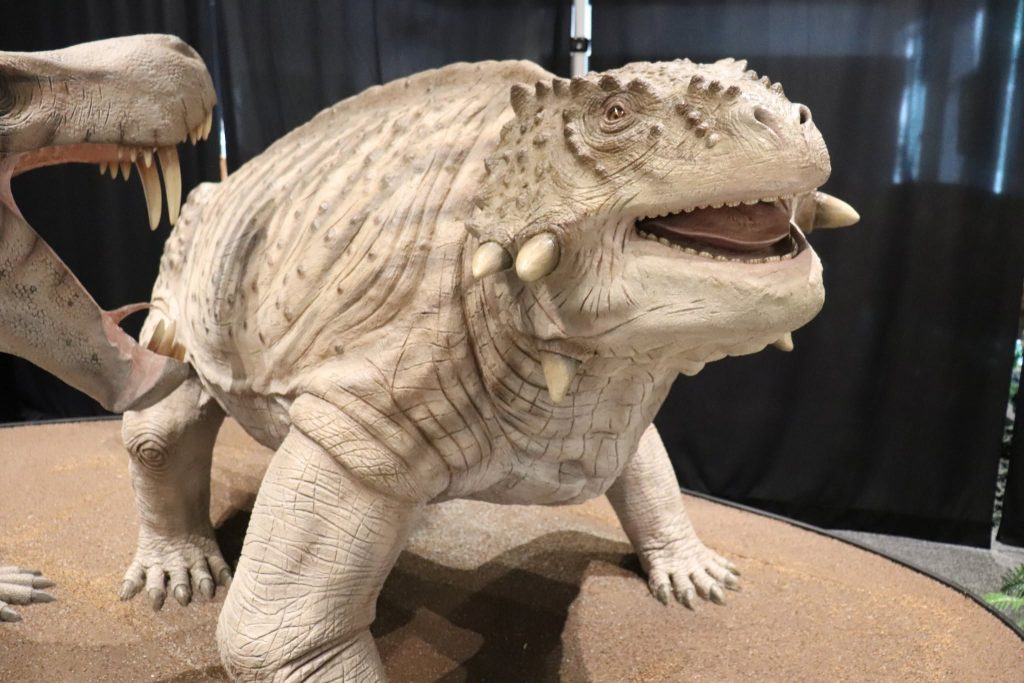
Scutosaurus — the armored tank herbivore (~259–251.9 million years ago)
Scutosaurus, which literally means “shield lizard,” was basically a prehistoric armored tank with legs. This large plant-eating reptile could reach around 3 meters long and was covered in bony plates to protect itself from the likes of Inostrancevia. It was slow, heavy, and probably spent a lot of time eating tough plants. In a way, Scutosaurus was the progenitor of big armored dinosaurs like Ankylosaurus and Triceratops.
Dimetrodon — the faux-dinosaur (~295–270 million years ago)
Dimetrodon is one of the most famous prehistoric creatures to be constantly confused with dinosaurs. It lived tens of millions of years before dinosaurs appeared and was actually more closely related to mammals than to T. rex. The enormous sail on its back is the first thing that draws your attention. Just like with other lizards rocking a sail, scientists think it helped regulate body temperature as well as attract a potential mate.
Arthropleura — the giant millipede (~346–290 million years ago)
Arthropleura was the largest known land arthropod, and it could grow over 6 ft long. Recent research suggests it was more of a plant-eating giant than a hunter, which, while somewhat comforting, still doesn’t change the fact that seeing one up close would give anyone a heart attack. Before large vertebrates fully took over land, creatures like Arthropleura had room to become absolute units.
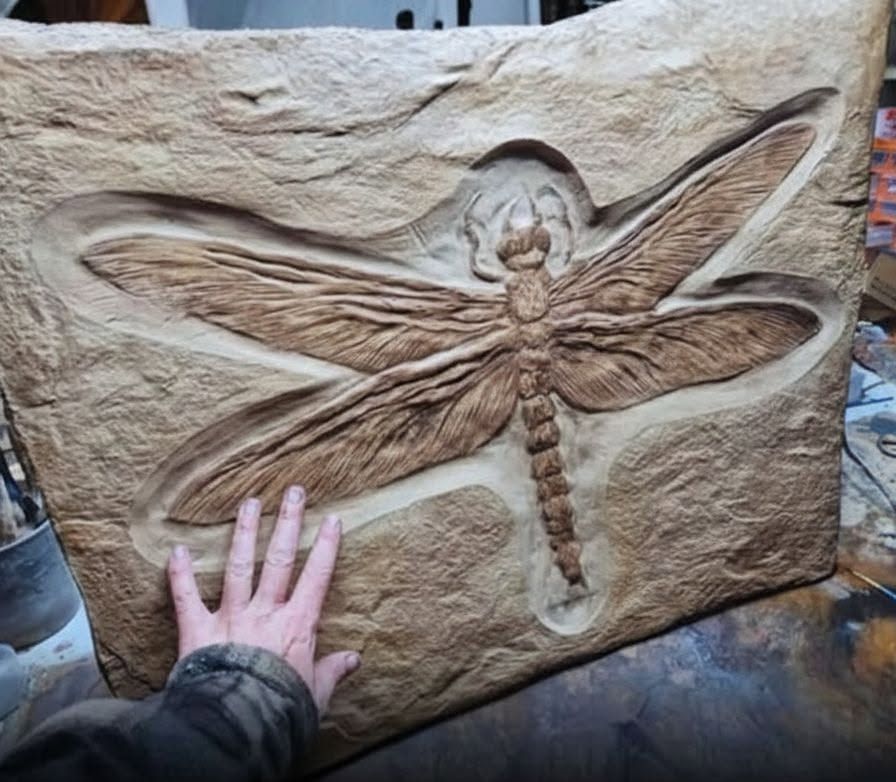
Meganeura — the monstrous dragonfly (~305–299 million years ago)
Meganeura looked like a dragonfly that had mutated and become a raid boss. With a wingspan around 70 cm, it was one of the largest flying insects ever known. It lived near water, hunting smaller insects, amphibians, and basically any stuff that it came across. Just imagine having a picnic with these mega dragonflies buzzing around you.
Dunkleosteus — the fish with an iron jaw (~382–358 million years ago)
Dunkleosteus, with a lovely nickname “The Dunk,” was anything but cute. It was a heavily armored fish and one of the earliest major vertebrate apex predators. It lived during the Late Devonian and could grow several meters long. Instead of normal teeth, it had sharp bony plates that snapped shut with terrifying force. It was basically a swimming bear trap with armor.
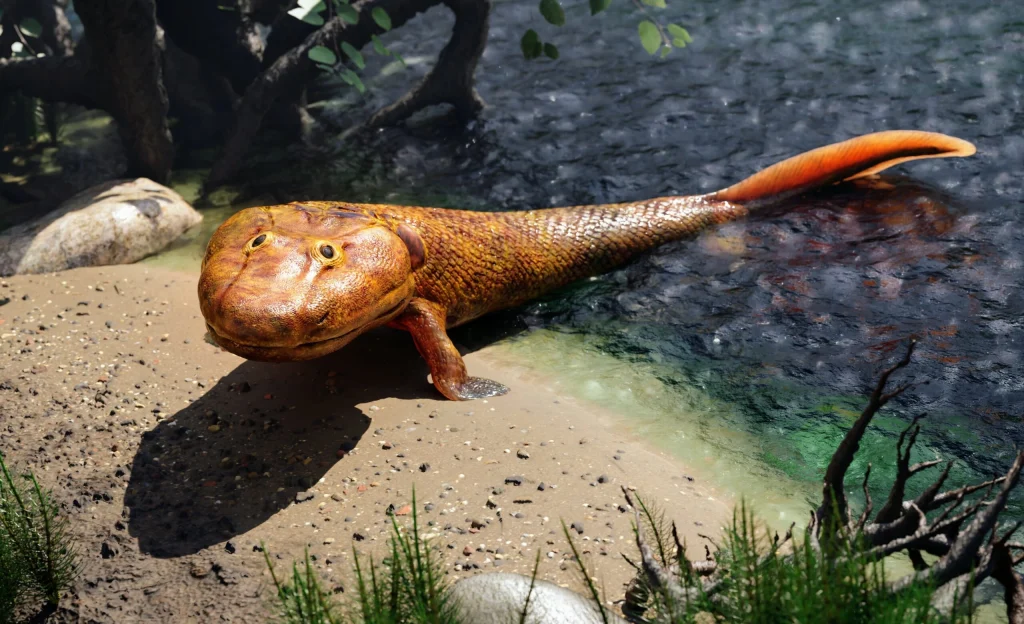
Tiktaalik — the fish that chose land (~375 million years ago)
Tiktaalik is famous for having the cajones to finally come onto land and stand on its own four flippers. Discovered in Arctic Canada, this 375-million-year-old “fishapod” had fish features, but also a mobile neck, strong fins, ribs, lungs, and limb-like bones. Tiktaalik was not the first animal to walk on land, but it shows the kind of body plan that helped make walking vertebrates possible.
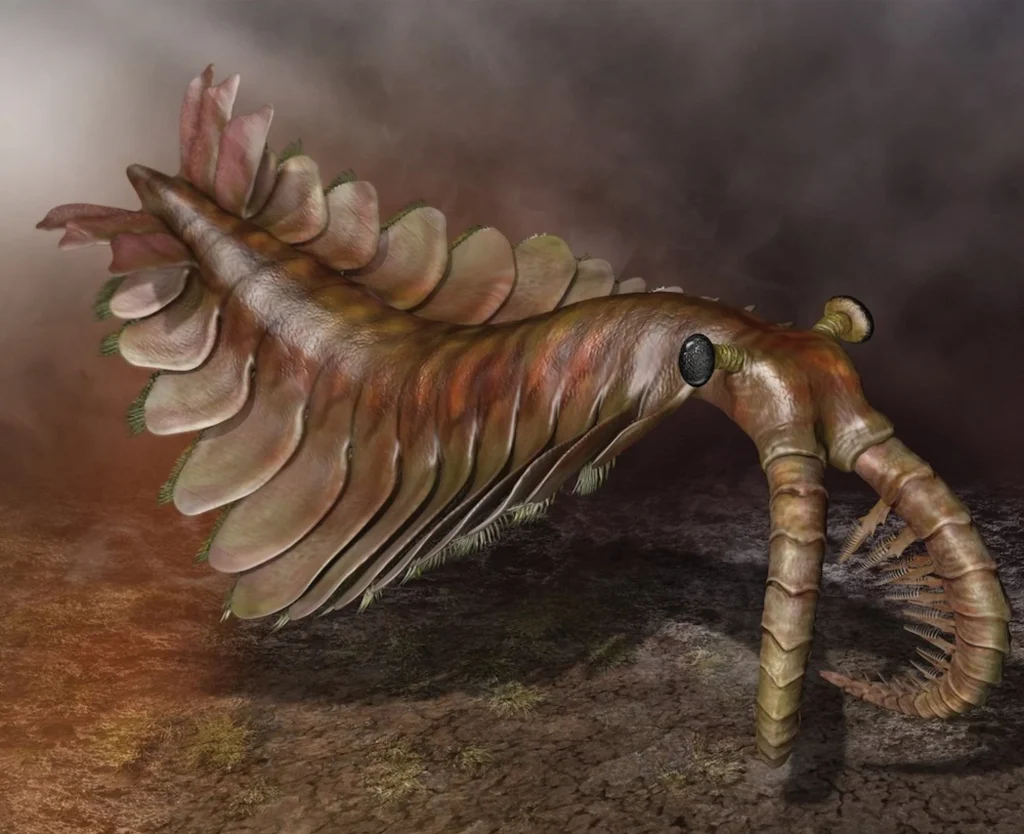
Anomalocaris — the Cambrian sea weirdo (~520–499 million years ago)
Anomalocaris, aka “unusual shrimp,” is a Cambrian predator that had grasping front appendages, big eyes, swimming flaps, and a circular mouth perfect for smooching. While hunting prey in open water, it probably relied on speed, vision, and agility. Fossil evidence shows Anomalocaris had powerful compound eyes, making it one of the sharpest hunters of its strange ancient ocean.