
Harry Potter movies are full of background details we only noticed on our 15th rewatch. But once you pause the movies, squint at the screen, and notice them, you feel like you deserve an honorary Hogwarts diploma. Some of these details are meant to be clever little nods to the books, some are blink-and-you’ll-miss-them mistakes or easter eggs, and some of them are emotional punches to the gut that only take a few seconds of screen time but cause you a lifetime of heartbreak. So let’s see how big of a fan you are and whether you knew about all of these.
Tom Riddle’s Trophy Was Hiding In Plain Sight
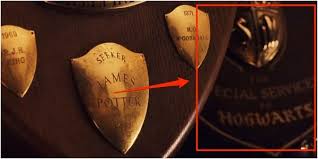
In Harry Potter and the Philosopher’s Stone, there’s a scene when Hermione shows Harry and Ron a Quidditch trophy case, you can see James Potter’s and Professor McGonagall’s trophies behind the glass. It’s a great moment showing that Harry’s dad was a gifted Quidditch player and that potentially Harry gets it from his dad, and also a fun little insight into McGonagall’s sporty side before she became one of Hogwarts’ sternest professors.
But just behind those Quidditch trophies, you can glimpse Tom Riddle’s award for Special Services to the school. Young Tom Riddle (future Lord Voldemort) got it for catching the student who opened the Chamber of Secrets. But we all know he completely framed Hagrid and got this award by lying to the headmaster.
Dumbledore Didn’t Magically Create The Feast
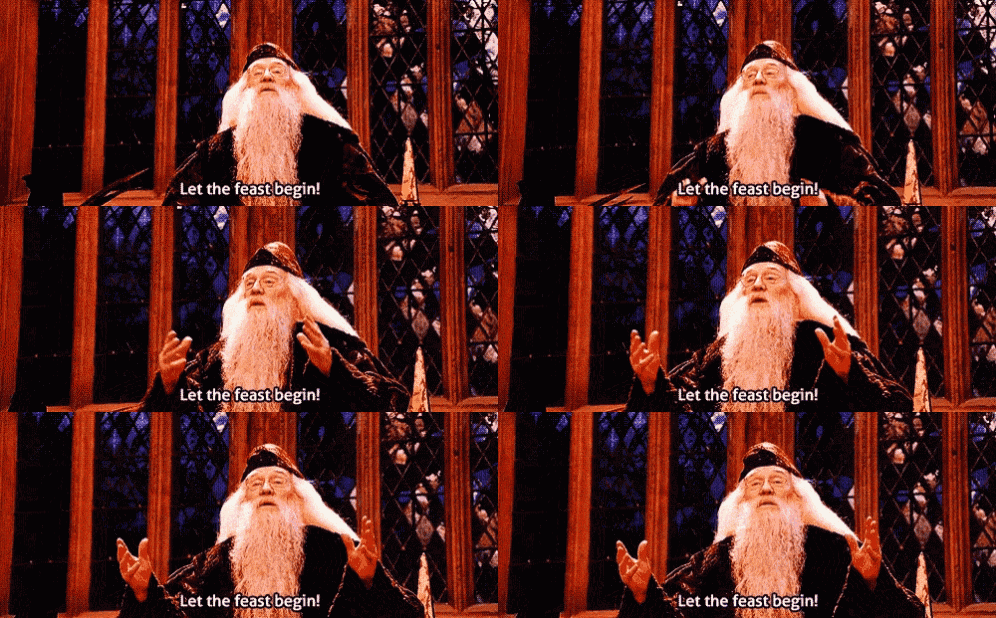
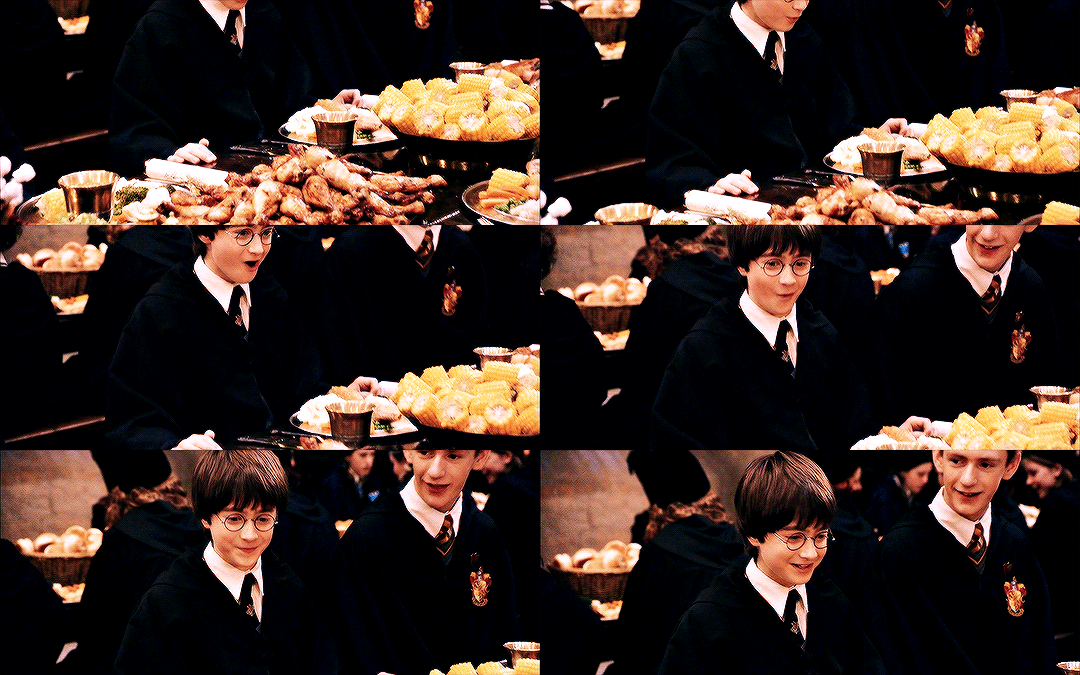
Every fan remembers the scene in the first movie, when students are seated at the huge tables in the Great Hall, Dumbledore waves his hands and says, “Let the feast begin,” and mountains of food appear in front of students on the tables. It looks like he just casually conjured it up. But that’s not quite the case. Even in the magical world of Harry Potter no one can just magic food out of nothing.
We find out in the fourth book “Harry Potter and the Goblet of Fire” that underneath the Great Hall is the Hogwarts kitchen, where elves prepare the food. They have the same 4 tables there, and when they put the food on the tables in the kitchen, the food is then magically transported to the tables above in the Great Hall.
So yeah, Dumbledore isn’t exactly a magical chef extraordinaire. It’s more of a clever catering system.
You Can Spot The Invisibility Cloak’s Green Screen Fabric
The Invisibility Cloak is quite an iconic object in the movies and in the books. Even Ron, who’s no stranger to magical objects, is impressed by it because apparently those are quite rare. It’s a great tool for Harry throughout the series, as it allows him to sneak around school undetected and get into all sorts of forbidden places.
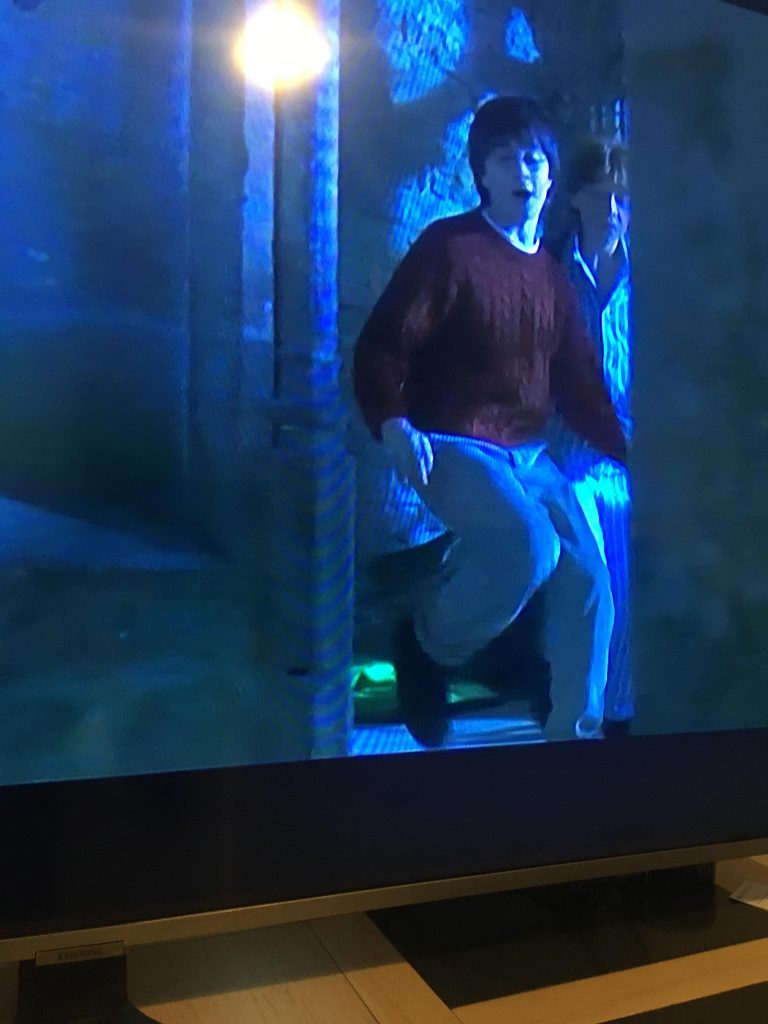
But there’s a little mistake in the Philosopher’s Stone movie that lets you know exactly how they pulled off that magical invisibility effect. When Harry and Ron sneak out to see the mirror of Erised, they discard the cloak on the floor and run towards the mirror. And in that split second, you can see a bit of the green screen fabric on the floor.
Hagrid And Dumbledore’s Names Have A Deeper Meaning
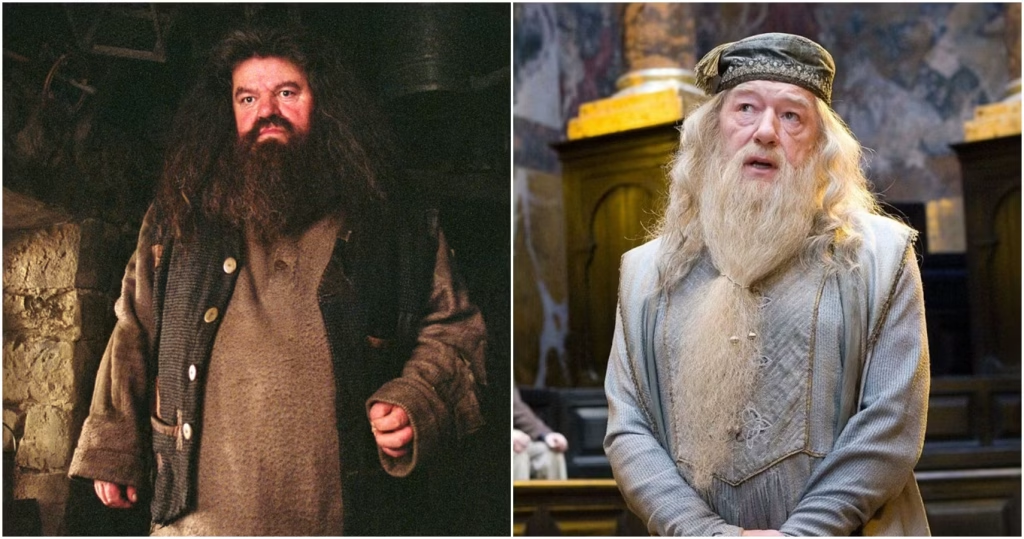
Did you know that the names Rubeus Hagrid and Albus Dumbledore are not random? “Rubeus” and “Albus” mean “red” and “white” in Latin. And in alchemy red and white are complementary colors that are symbolic to transformation.
Interestingly, Hagrid and Dumbledore play two different father figures in Harry’s life. Hargid is passionate and warm and he is in touch with his feelings and the world of nature. While Albus is slightly detached and scholarly but very wise. Together, they represent two contrasting influences in Harry’s life. Hagrid welcomes Harry into the magical world with warmth and loyalty. Dumbledore guides him through the larger moral and magical questions he has to face. One gives Harry heart. The other gives him perspective.
In the end, Harry needs both the giant softie and the mysterious chessmaster to become the hero he eventually becomes.
The Movie Timeline Gets A Bit Confusing
There’s a huge debate among the Harry Potter fans as to what time exactly the movies are set in. In the books it’s easy. Harry started Hogwarts in 1991, and his parents died on October 31st 1981.
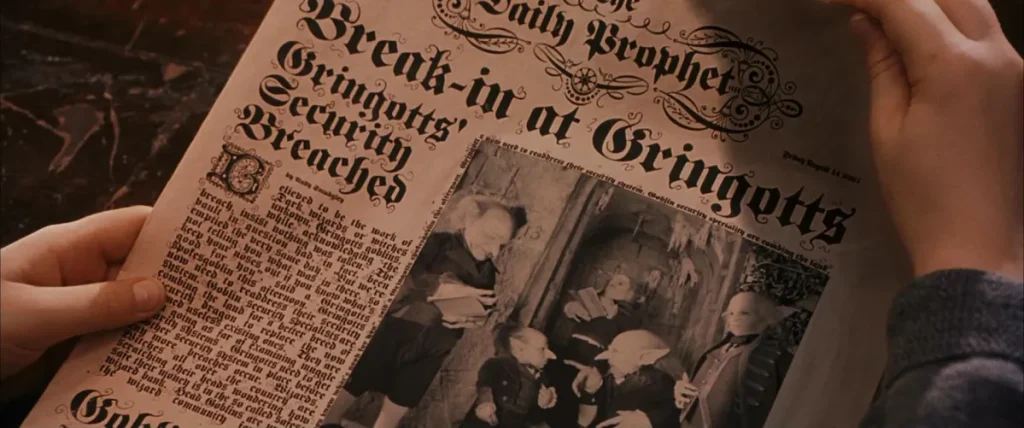
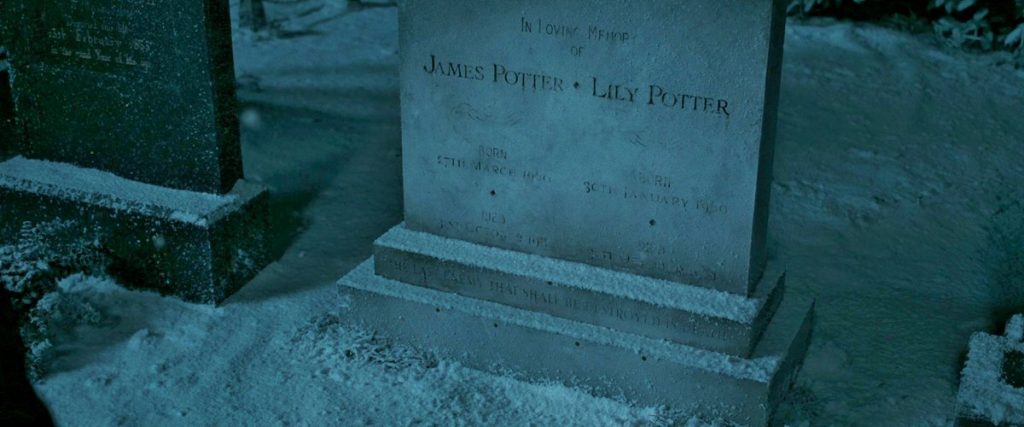
But in the movies it gets a bit confusing. In the Philosopher’s Stone there’s a shot of the Daily Prophet reporting on the break-in in Gringotts, and the date on the paper is August 14th 2001, which would suggest that the movies are set in the nauties. But later in Deathly Hallows Part 1, James and Lily’s graves show the date of death consistent with the books: October 31st 1981.
When you put that together, it messes with the timeline because that would suggest there are 10 years lost somehow, or Harry’s secretly 21 when he starts Hogwarts, which is ridiculous.
Most likely the date on the Daily Prophet was just an oversight. However, the debate about the timeline continues on the internet.
The Cornish Pixies Look A Lot Like Gremlins
In Chamber of Secrets, Gilderoy Lockhart unleashes Cornish Pixies in his Defence Against the Dark Arts class, because nothing says “qualified teacher” like releasing tiny chaos demons and then immediately losing control of the room.
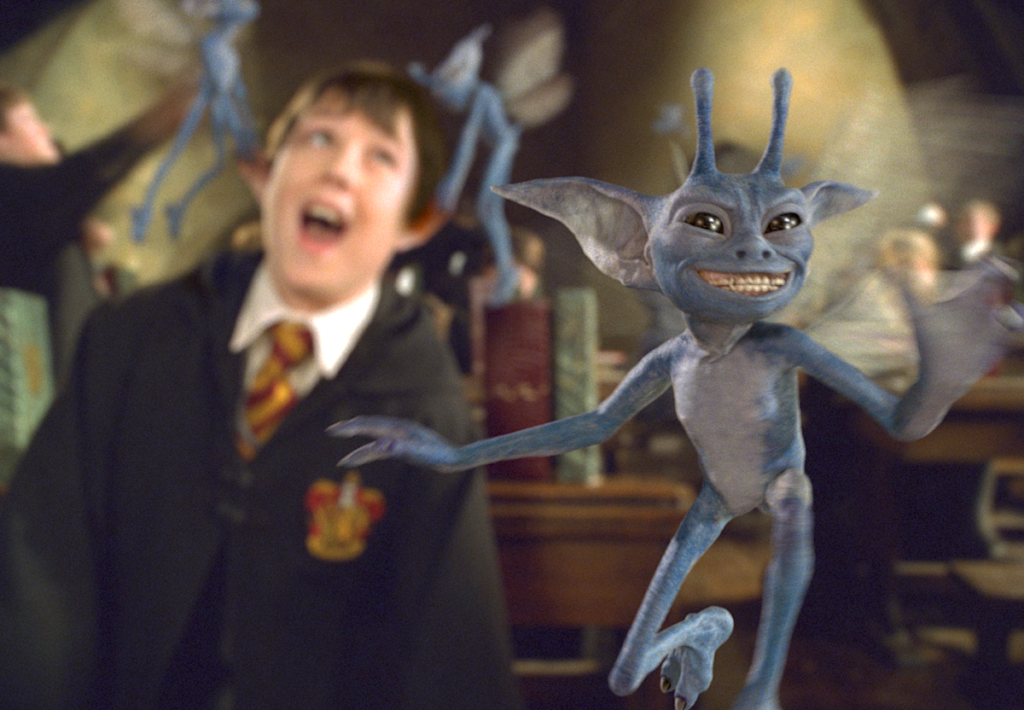
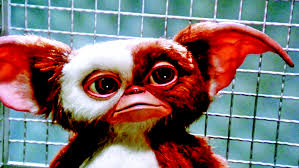
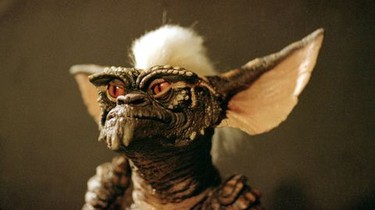
In the books, the pixies are described differently than they appear onscreen. In the movie, they have a striking resemblance to the creatures from Gremlins. Perhaps that’s not a coincidence, but in fact a little deliberate visual reference that Chris Columbus sneaked in. After all, he directed the first two Harry Potter films and also wrote Gremlins.
Neville Being Picked On Is More Important Than It Looks
In the same scene with the Cornish Pixies, the little creatures single out Neville Longbottom, pick him up into the air and he ends up hanging from the chandelier. It is played as a joke, because Neville spends much of the early films being the official Hogwarts magnet for humiliation.
In the movies, there’s a running gag of Neville constantly getting into trouble in all sorts of humiliating ways. In a way, singling out Neville in parallel to the trio could be a clever way to foreshadow the importance of his character and the heroic role he will play later in the movies.
After all, Neville and Harry have a lot of parallels and similarities, and he could have easily been the child in the prophecy. The films quietly begin underlining Neville’s importance long before he becomes the heroic, sword-wielding legend we all eventually cheer for.
Harry’s Duel With Draco Was Changed From The Book
In Chamber of Secrets, there’s a dueling scene between Harry and Draco. In the film, Draco hits Harry with a knockback charm, and Harry basically responds with a stronger version of the same spell.
It is effective, and slightly embracing for Draco? Definitely. He did the same spell but better. It suggests that Harry, who only recently found out about magic is already more skilled or talented than Draco, who grew up in this world as basically wizarding royalty. But what happens?
But in the book Harry hits Draco with Rictusempra—a tickling spell that makes a person collapse in a fit of laughter. It’s a shame we never got to see that on the screen, because throughout the movies they never showed a tickling spell in the movies.
Harry Has A “Martin Miggs” Comic In His Room
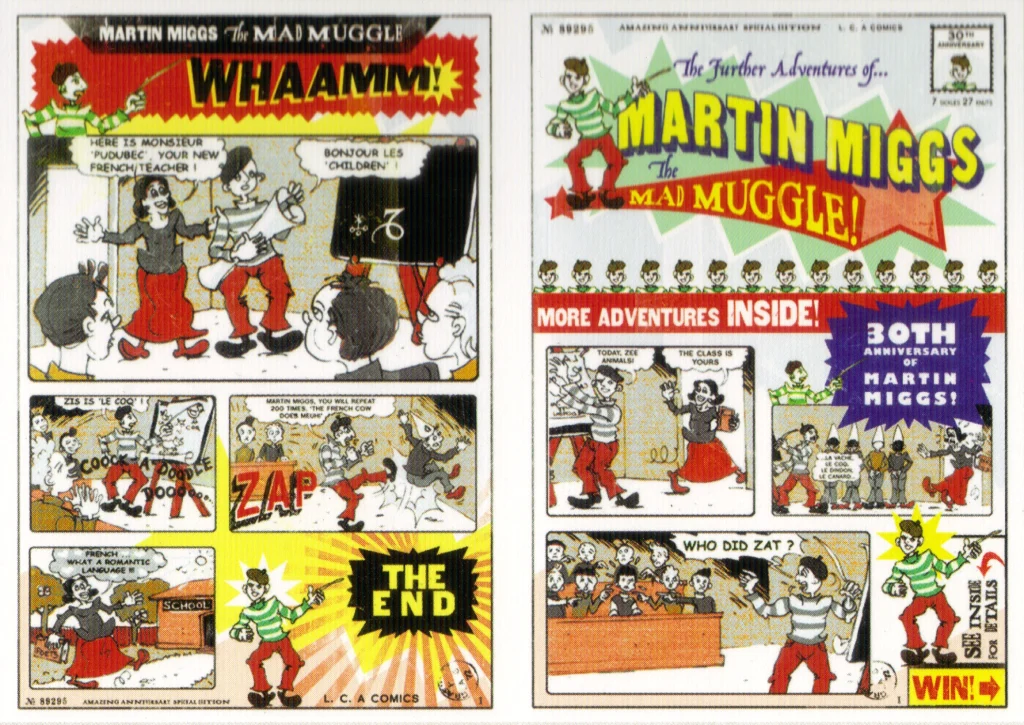
There’s a detail in the Prisoner of Azkaban. When Harry storms into his room, we can see a little comic strip on his wall. It’s from The Adventures of Martin Miggs, the Mad Muggle.
It’s not a huge plot point in any way. But that comic is mentioned in the Chamber of Secrets by Ron, and it’s become a little Easter Egg across the whole Harry Potter franchise, be it movies, books or even games.
Sirius Calling Harry “James” Is Devastating
All Harry Potter fans have burned this heartbreaking moment into their retinas. Remember the scene in the Department of Mysteries in the Order of the Phoenix? Sirius and Harry are fighting off a bunch of Death Eaters, and Harry disarms Lucius with an Expelliarmus. Serious, all caught up in the fight, proudly shouts, “Nice one, James.” It’s a brief moment but so powerful.
We see Harry be surprised but pleased to be called by his father’s name. It shows how similar Harry is to his father, so much so that for a moment Sirius feels like he’s got his friend back. It highlights how much Sirius misses James and Lily. It’s so emotionally charged and so touching and then made even more heartbreaking by the fact that those are the last words Sirius says.
Snape Secretly Protects Hogwarts During His Duel With McGonagall
In Deathly Hallows: Part 2, McGonagall confronts Snape after Harry accuses him of killing Dumbledore. The two professors cross wands, and McGonagall attacks with serious force. She believes Snape is a danger to the students, and she is ready to defend Hogwarts.
But if you look closely, Snape’s true loyalty is hidden in the choreography of the duel.
He doesn’t just deflect McGonagall’s spells, he specifically redirects them onto the two Death Eaters behind him. He basically takes them out in a clever way, without revealing himself as a double agent. He also then goes on to quickly pick up their wands before disappearing from Hogwarts. It’s so subtle and brilliant.