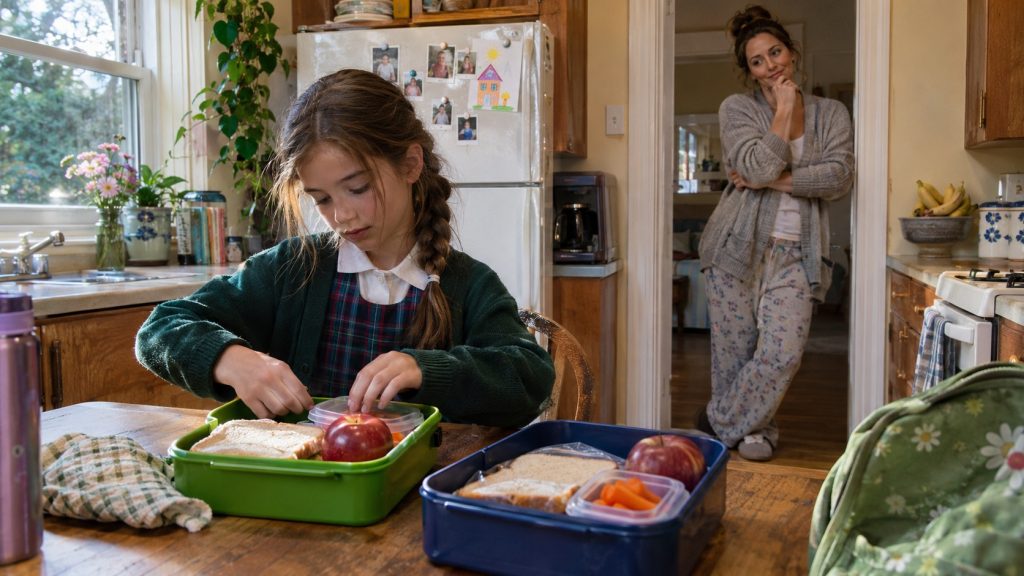
For three weeks, I thought my daughter was packing too much food. Every morning, Ava lined up two lunchboxes on the kitchen counter. One was purple, with a small apple tucked beside the sandwich. The other was green and came home empty.
I asked if she was giving away her lunch. She shook her head. “It’s for someone who eats alone.”
Ava had started fourth grade in September, and I worried about the usual things: new teachers, new routines, whether she had found her people. I had not considered that she might be watching for someone else who had not.
The empty chair at lunch
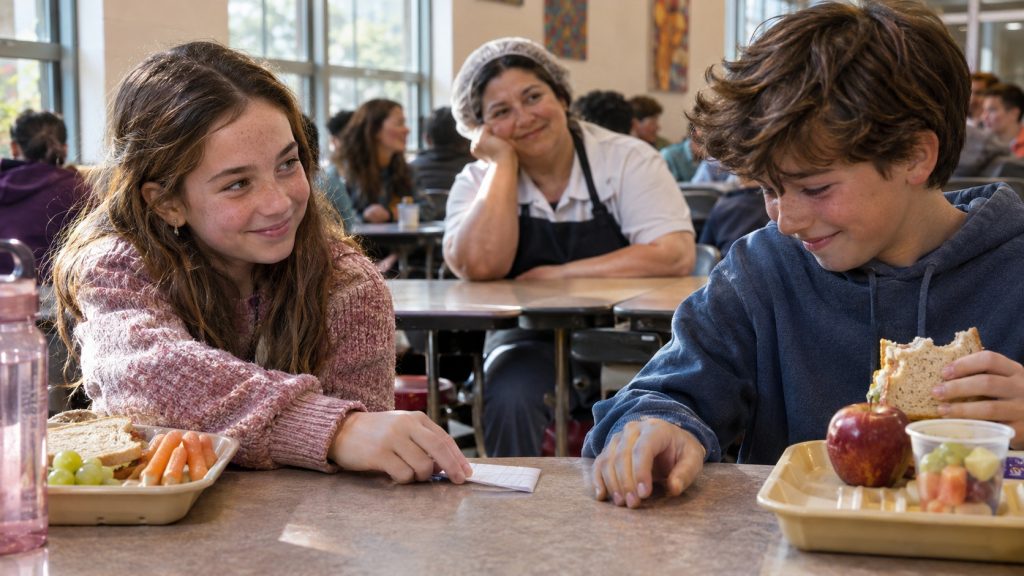
The boy’s name was Mateo. He had moved to town in the middle of the school year and sat at the end of Ava’s table. He ate the school lunch, Ava explained, but he rarely spoke. At recess, he often stood near the fence and watched the other kids play.
“I asked if he wanted to sit with me,” she said. “He said maybe tomorrow.”
The next morning, Ava asked if she could pack an extra sandwich. I hesitated. I did not want to teach her that kindness meant guessing what someone needed or making them feel singled out. So we talked about asking first. She could invite Mateo to share her table, and he could choose whether to accept.
That afternoon, Ava came home with both lunchboxes empty. She told me Mateo had brought his own food but had not wanted to sit by himself. They had talked about the map on his lunch bag, then about the old neighborhood he missed.
The second lunch, it turned out, was not a rescue. It was a reason to make room.
A few days later, Mateo’s father came to pick him up at the classroom door. I introduced myself. He thanked Ava for inviting his son to sit with her. “He’s been nervous about starting over,” he said. “He told us lunch was the first part of the day he didn’t dread.”
I felt the words land quietly. We had been so focused on whether Ava was settling in that we had missed the small way she had helped someone else settle, too.
A place at the table
Ava kept packing two lunches, but the second one changed. Some days it was an extra apple; other days, a cookie we had baked together. Mateo began bringing things to share as well: orange slices, a packet of crackers, once a tiny paper map of the town with the school marked in blue.
By winter, he no longer stood by the fence at recess. He and Ava still sat together at lunch, but other children joined them. Their table became the one where someone always asked, “Is this seat taken?”
At the end of the semester, Mateo gave Ava the map. He had drawn a little path from his new home to the school and added two stick figures outside the cafeteria. Under them he had written, “This is where I met my first friend here.”
Ava brought it home and taped it beside her desk. The green lunchbox still comes back empty most days. I no longer count what went into it. I think about the question my daughter asked before she packed the second lunch: not “Does he need help?” but “Would you like to sit with me?”
Sometimes a new place begins to feel like yours because someone saves you a seat.