
Picture an ordinary day in the woods: chainsaws roaring, fresh sawdust in the air, and loggers cutting a fallen tree into sections. Nobody expects a surprise inside the trunk. But in 1980, a routine logging job took a strange turn. Deep inside a hollow tree, the crew found the remarkably preserved body of a dog.
It’s a reminder that nature can keep secrets—and sometimes preserve the past in unexpected ways. From a hollow oak in Georgia to a towering desert cactus and the frozen soil of Canada’s Yukon, these discoveries show how plants, trees, and ice can shelter life long after it’s gone. They’re also explored in a video by A Curious Turn.
The Mystery Inside a Tree
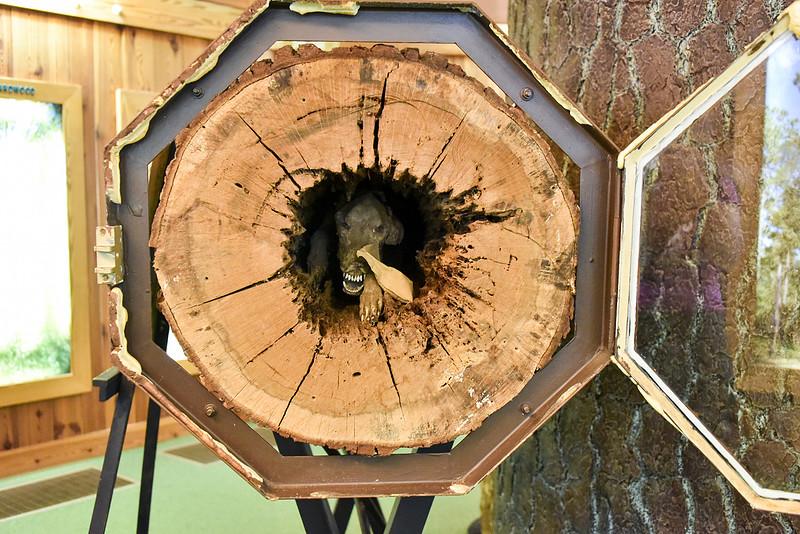
In 1980, a crew working for the Georgia Kraft Company was cutting a tree into sections when they made an astonishing discovery. Inside the hollow trunk was a dog’s body, preserved with its fur and skin still visible.
What made the find even stranger was its location. The dog was lodged high inside the tree—reports commonly put it about 28 feet above the ground.
How did it get there? The most likely explanation is that the dog was chasing a small animal, perhaps a raccoon or squirrel. It may have entered the hollow trunk through an opening near the base and scrambled upward. As the tree narrowed, the dog could have become trapped, unable to turn around or climb back down.
Researchers estimated that the dog was around four years old when it died, possibly in the 1960s. Its body remained inside the tree for years before loggers found it. Yet it had barely decomposed.
How could that happen? First, it helps to look at a few other places where nature has created surprising shelters.
A High-Rise in the Desert
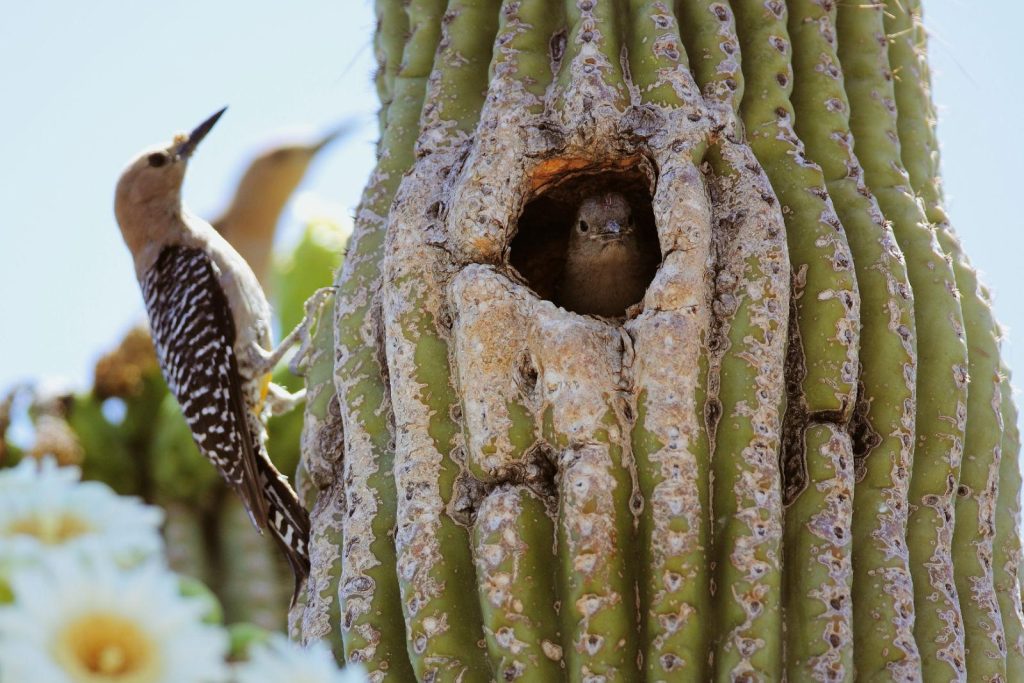
Thousands of miles away, giant saguaro cacti rise above Arizona’s Sonoran Desert. Look closely at one, and you might spot a small opening in its trunk. These cavities often begin with a woodpecker.
Gila woodpeckers and other birds carve nesting holes into living saguaros. The cactus responds by growing tough scar tissue around the opening. After the woodpecker leaves, other animals may use the cavity—including owls, smaller birds, and insects. The hardened shell left behind is known as a “saguaro boot.”
Even after a saguaro dies, its woody skeleton can remain standing for years. The cactus may be gone, but its structure can still provide shelter and nesting spots for desert wildlife.
A Ghost from the Ice Age
Now trade the desert heat for the frozen landscape of Canada’s Yukon. In 2016, a gold miner using water to blast through permafrost spotted something emerging from the thawing ground: a young wolf, preserved with her fur, skin, and soft tissue intact.
The pup, later named Zhùr, lived about 57,000 years ago. Scientists estimated she was roughly seven weeks old when she died. Analyzing her remains gave researchers clues about her life, including evidence that her diet contained aquatic food.
The most likely explanation is that Zhùr died when her den collapsed, burying her in sediment. The surrounding permafrost then kept her remains frozen for tens of thousands of years.
Discoveries like this offer more than a glimpse of one animal. They can give scientists clues about the wider ecosystem in which it lived.
The Secret Behind “Stuckie”
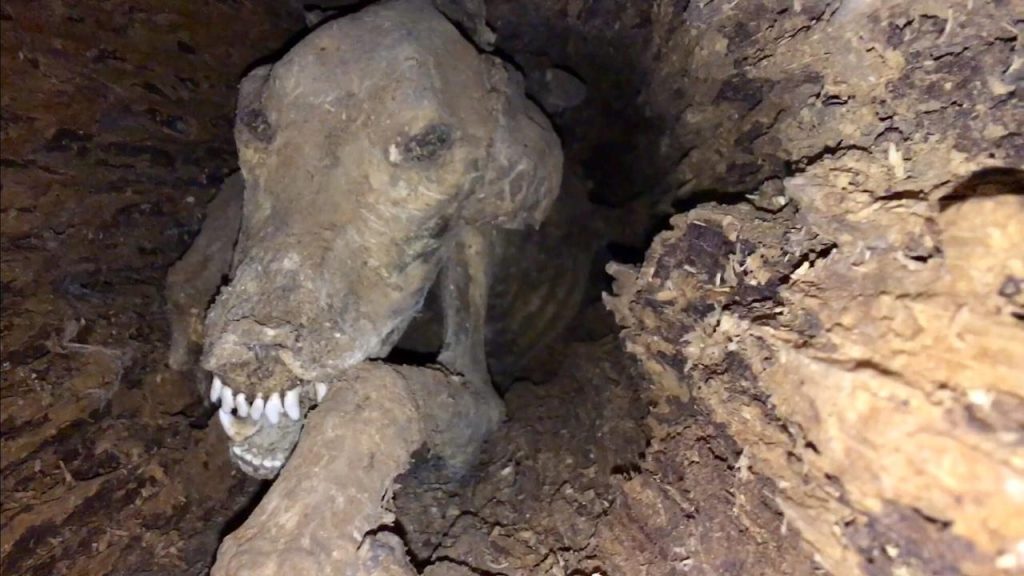
So how did the dog in Georgia remain preserved without ice or permafrost?
The hollow chestnut oak appears to have created the right conditions. Air could circulate through the trunk, helping moisture escape. Tannins in the oak may also have contributed to drying the dog’s skin. With less moisture available, decomposition slowed, and the body became naturally mummified.
The dog was placed on display at Southern Forest World in Waycross, Georgia. For years, visitors knew him simply as the mysterious dog found inside a tree. In 2002, he was given a name: Stuckie.
We may never know exactly what happened in Stuckie’s final moments or what Zhùr’s short life was like 57,000 years ago. But their stories leave us with a sense of wonder. Sometimes nature creates the right conditions to preserve what should have vanished—and lets us discover it long afterward.